
The Art of the Shoulder Season: Finding Stillness in the Cyclades
When the summer crowds recede, the islands return to themselves, offering a rare, quiet intimacy that no peak-season itinerary can replicate.
The Island After the Sun Dips
There is a peculiar, hollow resonance to an island in mid-October. The ferry docks at Naxos, and the kinetic energy that defined July has evaporated like mist off the Aegean. The air, once heavy with the scent of sunscreen and crowded taverna chatter, now carries the sharp, salt-crusted tang of the cooling sea. This is the shoulder season, a brief, fragile window where the landscape—stripped of its ornamental veneer—reveals its true character.
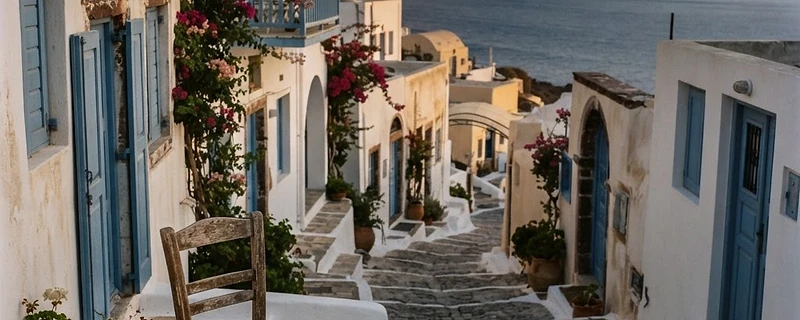
Traveling to the Cyclades during this time is an exercise in stripping away the excess. In the peak of August, the labyrinthine alleys of Parikia or Naoussa are theaters of performance, filled with frantic movement. In late autumn, they become intimate, quiet corridors. You can hear your own footsteps echoing against the whitewashed stone, a rhythm that finally syncs with the pulse of the island itself.
The Bounty of the Quiet Harvest
Off-peak travel demands a different kind of engagement. It is not about checking boxes or fighting for a sunset view at Oia; it is about the local cadence of daily life. Because the tour operators have largely shuttered, the remaining establishments are those that cater to the permanent residents. This is where you find the soul of the place. You aren't being sold an experience; you are being invited into a routine.
Consider the sensory experience of a dinner in a quiet village like Apiranthos. Without the rush of a hundred tourists waiting for a table, the kitchen slows down. The cook brings you the season's final bounty:
- Slow-roasted lamb infused with wild mountain herbs like oregano and savory.
- Fava beans puréed until velvet, drizzled with olive oil from trees that have stood for centuries.
- A carafe of amber-colored local wine, unfiltered and sharp, served in chipped glass.
- Seasonal figs that have ripened in the waning heat, served with a sharp, salty Graviera cheese.
There is no "service" in the transactional sense; there is only hospitality. You are there because you are curious, and in return, you are offered a seat at a table that isn't being turned over for the next guest. You are given the gift of time—an increasingly rare commodity in modern travel.
Practicing the Fine Art of Stillness
To embrace the off-peak is to accept the limitations of the season. You will not find every shop open. You might not find an umbrella on every beach. You will have to navigate the ferry schedules with a bit more grit. Yet, this friction is exactly what creates the memory.
When you visit Sifnos in the cool, crisp light of November, the hike along the ridgeline from Apollonia to the Kastro is a solitary communion with history. You are surrounded by the crumbling remains of antiquity and the vast, uncaring expanse of the sea, with nothing but the wind as your companion. There is no one to photograph, no one to impress. The landscape demands that you simply exist within it.
This is the most honest way to see an island. You see the rusted iron of the harbor cranes, the peeling paint on the fishing boats, and the genuine warmth of a shopkeeper who is genuinely happy to see a face that isn't attached to a cruise ship lanyard. You learn that the island is not a backdrop for your vacation, but a living, breathing entity that needs its winters just as much as its summers. By choosing the quiet path, you earn a seat at the table of a world that is usually kept behind a veil, and that is a far more rewarding souvenir than anything you could ever pack in a suitcase.
This article may contain affiliate links. Trippanna earns a commission on bookings made through partner links, at no extra cost to you. All bookings are the responsibility of the third-party provider.