
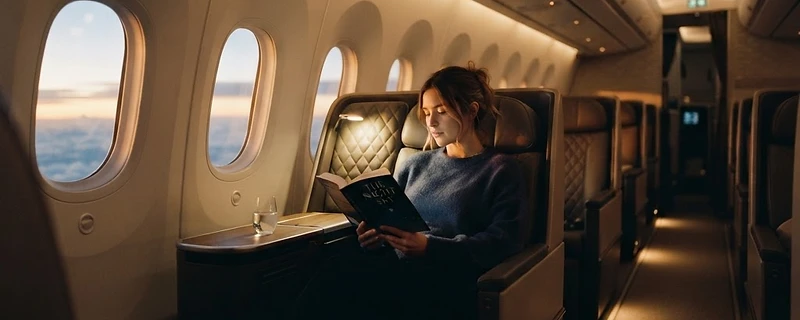
The Art of the Ascent: Finding Equilibrium in Premium Economy
A deep dive into the quiet middle ground of air travel, where comfort is no longer an afterthought but a deliberate, measured experience.
There is a specific kind of liminal space found at 35,000 feet, somewhere between the hurried efficiency of the main cabin and the gilded enclosure of the forward suites. It is here, in the premium economy cabin, that the modern traveler often finds their most balanced rhythm. As air travel becomes less about the act of transit and more about the preservation of one's equilibrium, this mid-tier sanctuary has quietly redefined the long-haul experience.
The Architecture of Ease
Stepping into a well-executed premium economy cabin—like those found on modern fleets crossing the Pacific to Tokyo or the Atlantic to London—the first shift is sensory. The lighting is often dialed to a softer, warmer kelvin, and the architecture of the seat itself suggests a firmer commitment to your physical well-being. You are greeted with a dedicated check-in queue, a small but meaningful gesture that preserves the nervous energy you spent your morning gathering.
Once settled, the math of the cabin becomes clear. With a pitch that typically sits around 38 inches, you aren't just buying extra legroom; you are buying the ability to move without apology. When the passenger in front reclines, the geometry of your own space remains largely intact. It is a subtle difference, but over a ten-hour flight to Seoul, this lack of encroachment is the difference between arrival and exhaustion.
Culinary Intentions and Quietude
In the premium cabin, the service cadence shifts. You are usually served on actual ceramic or high-quality melamine, with glassware that feels sturdy in the hand. The menu often leans into regionality rather than comfort-standard beige. Imagine a light yuzu-marinated cod served alongside heirloom purple carrots, paired with a glass of crisp, mineral-forward Riesling that hasn't been thinned out by atmospheric pressure.
Beyond the plating, the intangible benefit of this cabin is the reduction of density. With fewer passengers per lavatory and a more attentive crew-to-passenger ratio, the experience becomes less communal and more contemplative. Consider the utility of your environment:
- Adjustable headrests with 'wings' that actually cradle the temples for sleep.
- Noise-canceling headsets that provide a genuine shield against the drone of the turbine.
- Ample stowage for personal effects, keeping your immediate horizon clear of clutter.
- A dedicated power port for every seat, ensuring your quiet tools of work or escape stay charged.
Arriving with Intent
There is a poetic irony in the way we traverse the globe. We spend hours suspended in a pressurized tube, moving at the speed of a jet stream, yet we crave nothing more than the sensation of being grounded. Premium economy excels because it acknowledges this tension. It provides the space to read, the stillness to process, and the physical comfort to allow for a few hours of genuine rest.
By the time the descent into Narita or Heathrow begins, the difference is tactile. You haven't just endured the flight; you have used it. You step onto the jet bridge not as a person who has been folded into a corner for half a day, but as one who has had the time to recalibrate. In an era where travel is often defined by its velocity, choosing the middle ground is perhaps the most practical form of luxury left to us.
This article may contain affiliate links. Trippanna earns a commission on bookings made through partner links, at no extra cost to you. All bookings are the responsibility of the third-party provider.