
The Long Shadow: Finding Stillness in Off-Peak Island Life
When the summer crowds dissolve, the islands return to their true selves, revealing a quiet, rhythmic beauty that only exists in the stillness of the shoulder season.
The Art of the Residual Glow
There is a specific, melancholy beauty to an island in November. In places like Milos, Greece, or the rugged cliffs of the Aran Islands, the frenetic pulse of August has finally ebbed. The tavernas that were once overflowing with the clamor of day-trippers have folded their chairs, leaving behind a silence so profound it feels like a physical presence. You are not visiting an island as a product, but rather observing it as a living organism catching its breath.
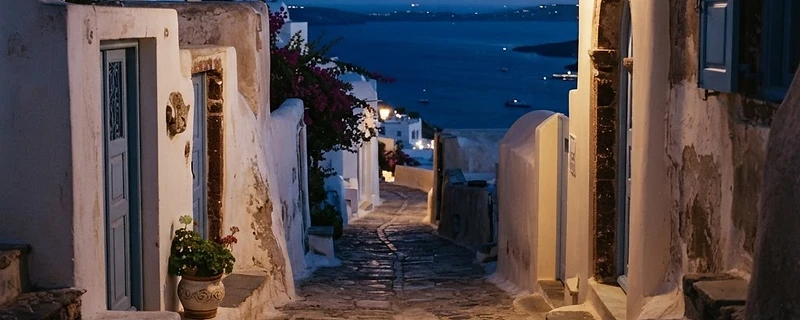
This is the season of the 'residual glow.' The sea remains warm from months of relentless sun, yet the air carries the crisp, sharp edge of autumn. In the Cyclades, the Etesian winds have ceased, replaced by a gentle stillness that allows you to hear the distant chime of goat bells across the caldera. When you walk the narrow, white-washed alleys of Plaka, the only sound accompanying your footsteps is the rhythmic lapping of the Aegean against the volcanic rock.
The Rhythm of Local Resilience
Off-peak travel is not about convenience; it is about authenticity. When you arrive in the shoulder season, you are treated less like a consumer and more like a guest in a home that is finally settling down for the winter. The shopkeepers have time to linger over coffee, and the menus shift from mass-market favorites to the honest, slow-cooked staples of the region.
Consider these small shifts that define the off-peak experience:
- The table selection is no longer a strategic maneuver; the best view of the harbor is yours for the choosing.
- Local markets offer the harvest of the late season—pomegranates in the Mediterranean, or wild mushrooms in the Pacific Northwest.
- The light loses its harsh, midday glare, stretching into long, golden hours that illuminate the landscape with a painterly softness.
- Cultural institutions operate at a human scale, allowing you to engage with history without the barrier of velvet ropes or surging queues.
In the Faroe Islands, the absence of summer cruise ships means you can sit in the grass above the Múlafossur waterfall for hours without interruption. You are afforded the luxury of contemplation, a commodity that is increasingly rare in our modern, hyper-connected world. You begin to understand why the locals choose to stay; it is not just for the views, but for the profound connection to the land that manifests only when the world is not watching.
The Necessary Quiet
Traveling during the off-season requires a shift in expectation. You may find that the ferries run less frequently, or that your favorite bakery is closed until spring. But these inconveniences are, in truth, invitations to slow down. You become a participant in the island's natural cycle rather than an interloper disrupting it.
In the Azores, the misty, moss-covered craters of São Miguel feel more mythic in the damp, cool air of late October. You spend your afternoons soaking in natural iron-rich thermal pools, the steam rising into the dense green canopy of the forest, feeling entirely untethered from the demands of the mainland. It is in this stillness that we often find the answers to questions we haven't yet dared to ask. By stepping out of the flow of traditional travel, we grant ourselves permission to inhabit the present moment, fully and without reservation.
This article may contain affiliate links. Trippanna earns a commission on bookings made through partner links, at no extra cost to you. All bookings are the responsibility of the third-party provider.