
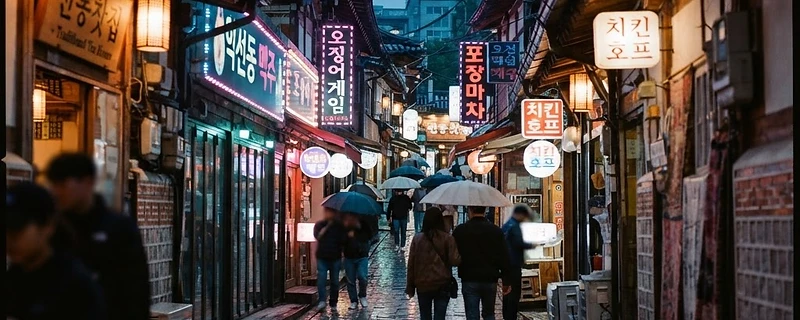
Seoul in Suspension: A Weekend of Contrast and Continuity
Between the quiet stone walls of Gyeongbokgung and the neon pulse of Seongsu-dong, Seoul reveals itself in layers of architectural poetry and culinary tradition.
The Morning Stillness of Bukchon
To understand Seoul, one must first wake up before the city does. Start your Saturday in the Bukchon Hanok Village, where the morning mist clings to the curved roof tiles of traditional homes. As the sun crests the granite peaks of Bugaksan, the silence is punctuated only by the soft click of shutters. Wander the narrow alleys—don't rush, for these lanes were designed for contemplation, not efficiency. Stop at a quiet tea house to experience o-mi-ja-cha, a five-flavor berry tea that mirrors the complexity of the city itself: sweet, sour, salty, bitter, and pungent all in one glass.
By mid-morning, walk toward the Samcheong-dong neighborhood. Here, the transition from Joseon-era architecture to minimalist modern galleries feels seamless. The air is thick with the scent of roasted coffee and old pine. It is here that you will find the soul of the city: a refusal to choose between the weight of history and the velocity of the future.
The Kinetic Energy of Seongsu-dong
Cross the Han River as the afternoon light turns gold. Your destination is Seongsu-dong, often heralded as the Brooklyn of Seoul, though it possesses a grittier, industrial texture all its own. Once a hub for shoemakers and textile factories, the neighborhood has been reimagined into a sanctuary for the avant-garde.
- Daelim Changgo: Housed in a cavernous former grain mill, this space captures the raw, industrial history of the district through massive art installations and an espresso bar that breathes new life into weathered red brick.
- Seoul Forest: A verdant lung in the middle of the concrete landscape, perfect for watching the local fashion subcultures converge during the golden hour.
- Common Ground: A retail space constructed entirely from shipping containers, reflecting the mobility and ephemeral nature of contemporary Korean design.
As the sun dips, find a seat at a neighborhood pojangmacha—a street tent serving soul-warming comfort food. Order a plate of tteokbokki and a bowl of fish cake soup. The steam rising from the metal bowls against the cool night air is perhaps the most quintessentially Seoul image you will encounter all weekend.
The Nocturnal Rhythm of Euljiro
Sunday in Seoul is for the dreamers. Head to the Euljiro district, a place that feels caught in a cinematic time capsule of the 1980s. The alleys are packed with small printing shops and hardware merchants by day, but as evening falls, the neighborhood transforms into a hidden network of 'hidden' bars and restaurants tucked away on upper floors of aging buildings.
Navigation here requires intuition rather than a map. Look for flickering neon signage tucked deep into stairwells. You are looking for the places where the locals gather for gopchang (grilled small intestines) or a cold bottle of Hite shared over plastic tables on the sidewalk. There is no pretense here. In Seoul, the most profound cultural experiences are often found in the spaces where the polish has worn away, leaving only the warmth of human connection.
As you stand on the bridge overlooking the Cheonggyecheon stream before your departure, watch the city lights shimmer on the water. Seoul is not a destination you simply see; it is a frequency you tune into. It is a metropolis of relentless reinvention, yet it guards its secrets with the patience of a mountain.
This article may contain affiliate links. Trippanna earns a commission on bookings made through partner links, at no extra cost to you. All bookings are the responsibility of the third-party provider.