
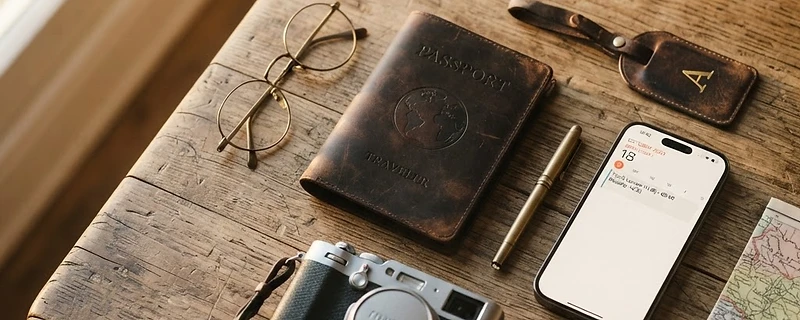
The Architecture of Ease: Curating Your Journey in an Analog World
Travel is an art form best practiced when the logistics fade into the background, leaving room for the unexpected beauty of a quiet morning in Kyoto or a sunset over the Cyclades.
The Gentle Art of Anticipation
There is a peculiar tension inherent in the act of departure. We spend weeks dreaming of the slate-grey tiles of an alleyway in Lisbon or the smell of scorched earth after a summer rain in Provence, yet we often arrive at our destination frayed by the process of getting there. The modern travel experience is frequently cluttered with notifications, fragmented bookings, and the phantom stress of the unknown. To travel well is to cultivate a state of readiness, where the heavy lifting of logistics is performed by tools so seamless they disappear from consciousness.
True travel planning is not about checking boxes; it is about creating a structural framework that allows for spontaneity. When your base-layer logistics are sound, you are free to wander without the persistent anxiety of a misplaced reservation or a forgotten train ticket. The goal is to move through the world with the lightness of a local, unburdened by the friction of travel.
Digital Intuition: Your Invisible Concierge
To strip away the noise, I rely on a curated suite of tools designed to hold the weight of the journey. These platforms act as a digital spine for the itinerary, providing clarity when you are navigating the chaotic transition from a terminal to a city center.
- TripIt Pro: The gold standard for logistical coherence. It pulls every flight, boutique hotel, and dinner reservation into a single, chronological timeline that operates entirely offline—a vital feature when you are wandering the subterranean levels of Tokyo Station.
- Citymapper: Far superior to generic mapping services, Citymapper understands the rhythm of urban transit. Whether you are navigating the complex bus routes of London or the night-owl transit schedules in Berlin, it offers a level of precision that feels almost intuitive.
- Flush: When you are deep within the historic centers of Florence or Mexico City, the simple necessity of a clean restroom can disrupt an entire afternoon. Flush provides a map of public facilities, allowing you to focus on the frescoes of the Uffizi rather than the stress of the hunt.
- Revolut: Moving money shouldn't require a high-wire act of exchange rates. This allows for near-instant currency conversion, meaning you can sit at a corner café in Buenos Aires and focus on the bitterness of your espresso rather than the mathematics of the bill.
The Wisdom of the Offline Shift
Even with the most sophisticated tools, there is a profound serenity found in the decision to disconnect. I frequently download entire regions via Google Maps or save PDF itineraries to a dedicated 'Travel' folder on my device, ensuring that if the cellular signal dies amidst the limestone cliffs of Ha Long Bay, my path forward remains clear.
There is a cinematic quality to this approach. By front-loading the organization—pre-booking that hidden gem of a restaurant in a district known for its mezze, or having your transit QR codes grouped in a single widget—you reclaim your mental bandwidth. Instead of checking your phone to see 'what is next,' you look up to see the way the light catches the white-washed walls of an Oia sunset. The tools are merely the scaffolding; the experience itself remains entirely yours to inhabit.
This article may contain affiliate links. Trippanna earns a commission on bookings made through partner links, at no extra cost to you. All bookings are the responsibility of the third-party provider.