
Tracing the Spine of the Bernina: A Winter Passage
High above the Engadin valley, the Bernina Express cuts a path through the silence of the Alps, bridging the gap between frozen glaciers and the sun-drenched Italian plains.
The Architecture of Stillness
There is a peculiar, rhythmic meditation to the Bernina Express as it climbs from St. Moritz. As the train leaves the bustle of the Swiss resort, the landscape shifts into a series of monochromatic studies: the deep, velvet blue of frozen alpine lakes, the stark, skeletal reach of larch forests, and the overwhelming brilliance of the Morteratsch Glacier. This is not merely transportation; it is a slow-motion immersion into the geology of the Earth.
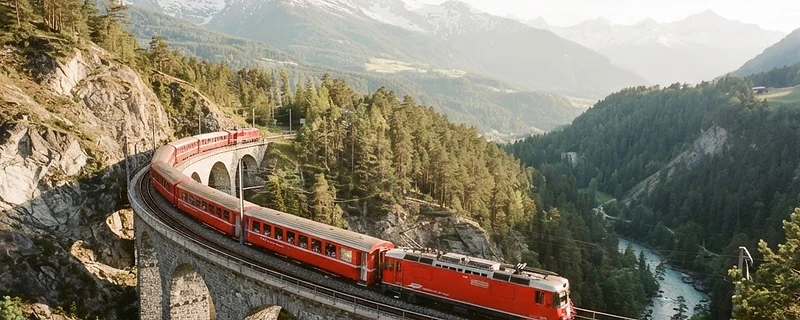
The line is a marvel of 20th-century engineering, a UNESCO World Heritage feat that manages to crest the Bernina Pass at 2,253 meters without the aid of a rack-and-pinion system. The track winds through narrow granite passes and across the iconic, gravity-defying circular viaduct at Brusio. As you watch the rear carriages curve perfectly into your line of sight, the tension of modern travel seems to dissolve into the rhythmic click-clack of steel on iron.
Descent into the Mediterranean Light
By the time the train descends into the Poschiavo Valley, the air begins to soften. The sharp, bracing bite of high-altitude frost gives way to the scent of woodsmoke and the faint, earthy sweetness of chestnuts roasting in the village squares. The transformation is abrupt and cinematic. You are effectively traveling from the heart of Germanic Europe into the vibrant, sun-baked aesthetic of Lombardy, Italy.
Arriving in Tirano feels like stepping through a veil. The town is a labyrinth of terra-cotta roofs and narrow, cobblestone alleys that hum with the quiet intensity of local life. Here, the journey demands a pause. Before catching a return connection or wandering toward the shores of Lake Como, settle into a local osteria for a meal that grounds you in the region:
- Pizzoccheri: A robust local pasta made of buckwheat, layered with savoy cabbage, potatoes, and generous shavings of Valtellina Casera cheese.
- Bresaola: Thinly sliced, air-dried beef from the surrounding valley, served with a drizzle of cold-pressed olive oil.
- Nebbiolo: A glass of the deep, structured red wine produced from the steep, terraced vineyards of the nearby Valtellina slopes.
The Practicality of Beauty
To experience this route is to embrace a departure from the efficiency-obsessed travel culture. The train moves with a deliberate pace, intentionally slowing down at the most vertiginous precipices to allow passengers to witness the sheer verticality of the landscape. It is a reminder that the detour is often the destination itself.
If you plan to make this journey, avoid the peak mid-day summer tours. Opt for the early morning departure in late autumn or early spring. The low-angled light during these shoulder months turns the glaciers into ribbons of silver and the rock faces into shades of violet and ochre. Pack a light wool sweater, a thermos of local tea, and a physical map. While the digital world is easily accessible, there is a profound pleasure in tracking your own progress across the jagged spine of the mountains, watching the world reorder itself through the panoramic glass.
This article may contain affiliate links. Trippanna earns a commission on bookings made through partner links, at no extra cost to you. All bookings are the responsibility of the third-party provider.