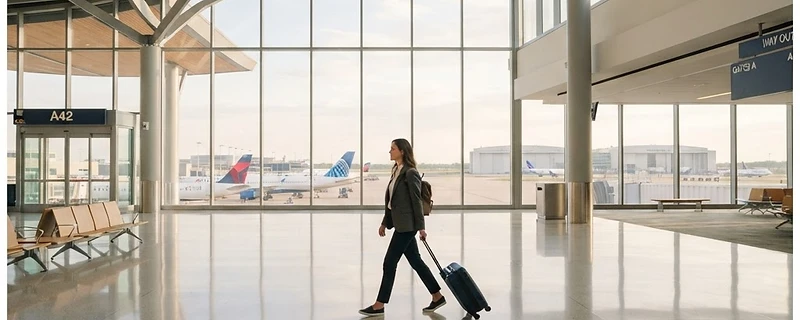
Finding Flow: A Practical Guide to Navigating Major International Hubs
Transform the stress of a sprawling airport into a seamless journey with these expert tips for navigating international hubs with grace and ease.
The Architecture of Arrival: Seeing Beyond the Chaos
There is a peculiar, pressurized silence that exists just before you step off a long-haul flight into a major international hub like London Heathrow, Singapore Changi, or Tokyo Narita. For the first-time traveler, these spaces can feel like labyrinthine monoliths, designed to disorient rather than facilitate. Yet, when viewed through the lens of purpose, these airports are merely the beating hearts of global transit, engineered for flow. Navigating a massive international terminal does not require a frantic pace; it requires a shift in perspective. To move through a major hub with grace, you must treat the airport not as a hurdle to be jumped, but as a space to be managed.
Begin by decoupling your arrival from your immediate impulse to rush. The most effective travelers are those who have mastered the art of the 'pre-arrival brief.' Before you even land, download the airport’s specific map—digital terminals like those on the official Heathrow or Changi websites are far more reliable than generic GPS. Locate your arrival gate, your connecting terminal, and, crucially, the distance between them. Understanding that you may need to navigate a train, a shuttle bus, or a pedestrian tunnel between terminals is the first step in reclaiming your agency. If you are flying airlines like ANA or Cathay Pacific, they often provide excellent internal transfer guidance on their mobile apps, which are frequently more detailed than the signage you will find on the ground.
Establishing Your Personal Transit Rhythm
Once you step into the terminal, the sheer volume of signage can feel like a sensory assault. The trick is to identify the 'Master Path.' Most major hubs utilize color-coded systems or iconography that prioritize the two most important flows: Transit (for those staying airside) and Exit/Arrivals (for those entering the country). Never follow the crowds blindly; crowds are often moving toward a singular, local flight or a specific baggage carousel that has no relevance to your journey. Instead, keep your eyes on the overhead placards, looking specifically for the 'Transfer' desk or 'Connections' lounge associated with your ticketed alliance—be it Oneworld, Star Alliance, or SkyTeam.
To ensure your transition remains seamless, consider these practical steps:
- Secure your documents early: Keep your passport and boarding pass in an easily accessible, dedicated pocket. Do not bury them in the bottom of a carry-on.
- Confirm your bags: Verify at check-in whether your luggage is checked through to your final destination. If you must re-check, ensure you have at least a three-hour window between flights.
- Prioritize hydration and movement: A major hub is a marathon, not a sprint. Stop at a refill station early, and take five minutes to stretch your legs before joining a transfer line.
- Offline access: Download your terminal maps and gate information for offline access, as airport Wi-Fi can be notoriously fickle when thousands of people are logging on simultaneously.
Finding Sustenance and Stillness
When the transit time stretches into hours, the temptation is to find the nearest gate-side bench and succumb to the fluorescent hum. Resist this. Major hubs are increasingly designed with 'quiet zones'—often tucked away from the main food courts and duty-free corridors. Look for transit lounges or garden areas, such as the indoor greenery at Changi or the quiet relaxation corners at Incheon. Seeking out these pockets of calm isn't just about comfort; it is about maintaining your equilibrium. A meal is an opportunity to reset your biological clock. Instead of fast food, look for local outposts within the terminal. In Tokyo, a bowl of piping hot udon or a simple onigiri from a convenience store provides far better sustenance than a processed sandwich, helping you feel grounded rather than lethargic when you eventually board your next flight.
If you find yourself with an extended layover—five hours or more—do not feel tethered to the gate. Many hubs offer transit hotels or day-use pods that allow for a proper shower and a horizontal surface. The price, often hovering around $60 to $100 for a few hours, is an investment in your arrival experience. Entering your destination city refreshed, having managed the transition with intention, changes the entire complexion of your trip.
A Note on Preparedness
Navigating an international airport is a skill honed through experience and preparation. Always ensure your travel insurance is active and that you have checked the specific visa requirements for transit in your destination country, even if you are not planning to leave the airport. Some nations require a transit visa even for airside movement. This article is general information and not legal, financial, or medical advice. Always check the latest government travel advisories for the countries you are transiting through before your departure.
By planning your movement, choosing your spaces with care, and maintaining a sense of quiet curiosity, you turn the airport from a chaotic checkpoint into a deliberate part of your travel story. You are not just getting from one place to another; you are finding your rhythm in the world’s most complex transit machines. Ready to plan less and travel more? See Trippanna Premium →
This article may contain affiliate links. Trippanna earns a commission on bookings made through partner links, at no extra cost to you. All bookings are the responsibility of the third-party provider.